



Specialty Coffee Indonesia Pegasing Lavato
Tax included
Shipping calculated at checkout
In stock

Are you tired of the usual Indonesian coffees with a dull, earthy, and inconsistent taste? Forget them.
In the heart of Aceh Tengah, between 1300 and 1500 meters, Hendra's farm has broken the mold. While the rest of the region is overwhelmed by rough processing, Hendra has created an island of technical perfection. This is not the usual "industrialized" coffee: it is an experimental microlot of only 40 tons per year, where every bean undergoes meticulous selection and double density sorting to guarantee you a defect-free cup.
The Sensory Profile: Expect an explosion of red fruits and a sweetness of vanilla you wouldn't believe possible from an Indonesian origin. A light body, medium acidity, and crystal-clear cleanliness will transform your coffee moment into an elite sensory experience.
Why choose it? Because it is a technical rarity produced by only 70 excellent farmers, fairly paid to offer you the Indonesia you have never tasted before.
FARMGATE PRICE
FARMGATE PRICE: €6.16
The farmgate price is ultimately the actual price paid to the farmer who produced the coffee at origin. It is the most transparent price you can find.
To the farmgate price, the following costs must be added before reaching the roastery:
- Packing costs
- Handling costs at origin
- Logistics costs (shipping and customs fees)
- Handling costs upon arrival
- Customs clearance and phytosanitary inspection costs in Europe
- Internal transportation costs
SENSORY DESCRIPTION
TECHNICAL DESCRIPTION
| Origin | Indonesia |
| Area | Aceh Tengah |
| Cooperative/Farm | Pegasing |
| Microlot | |
| Altitude | 1300-1500m |
| Variety | Tim Tim & Gayo 1 |
| Process | Washed |
FULL DESCRIPTION
This washing station and the related plantation belong to Hendra and his family. It is an island of specialty coffee with experimental processing in a sea of conventional "wet hulled" coffee (the Giling Basah process), typical of this area. Hendra's father, Hamdan, moved here in 2006 from Banda Aceh and bought land in the Pegasing subdistrict to start growing coffee. This move sparked a passion in Hendra, who began working with his father in 2010; shortly after, he started experimenting with washed coffees (washed) after studying old texts and seeking help from other producers in Indonesia who were moving away from traditional processing to highlight the unique characteristics these coffees can offer.
Since then, Hendra and his family have heavily invested in the farm, especially in post-harvest facilities where, thanks to some funding, they built a small wet mill with two pulpers, gravity washing channels, and several raised beds inside large polyethylene tunnels for coffee drying. Hendra has continued to experiment and today produces about 8-10 different processing types. The small washing station produces up to 40 tons of green coffee each year. The coffee is purchased from 70 local farmers who want to collaborate with Hendra and who pick only ripe cherries, incentivized by bonuses for excellent crop quality. If farmers have to travel from farther away to reach Hendra's station, they receive extra compensation for transportation. Hendra has also started a nursery where he is helping to cultivate the Abyssinia variety, introduced when coffee first arrived in Indonesia. He works with local farmers to plant small lots on their land, paying a premium for this variety due to its lower yield and superior cup quality.
Hendra decides the type of processing based on weather conditions and customer demand, as he sells most of his coffee to specialty roasters based in Indonesia, mainly in Jakarta.
The washed coffee is pulped and floated in channels before being fermented for 12-18 hours in a cement tank; then it is left to dry on raised beds for a period ranging from 8 to 14 days, depending on the weather. Before bagging, the coffee passes twice over a density table to remove immature beans and undergoes two rounds of manual selection to ensure cleanliness and specialty standards.
How to choose:
NITROGEN AND VACUUM
Our packages are all packaged in a protected atmosphere (first under vacuum and then we insert nitrogen), using this particular technology which eliminates oxygen in the package, the coffee remains fresh for up to 3 months after roasting.
ROAST
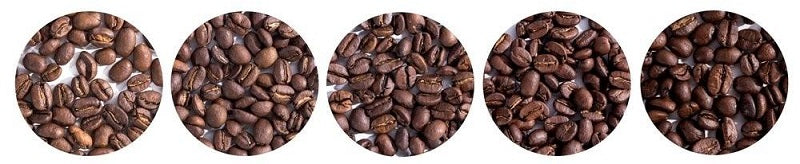
We roast in two different ways, dividing into two main groups, based on the type of extraction:
- Light: suitable for Filtro/Aeropress type extractions, or for those looking for a coffee with a note of strong acidity and many aromas.
- Medium: suitable for Espresso/Moka extractions, or for those who want a coffee with a much more intense flavor and a hint of bitterness.
GRINDING
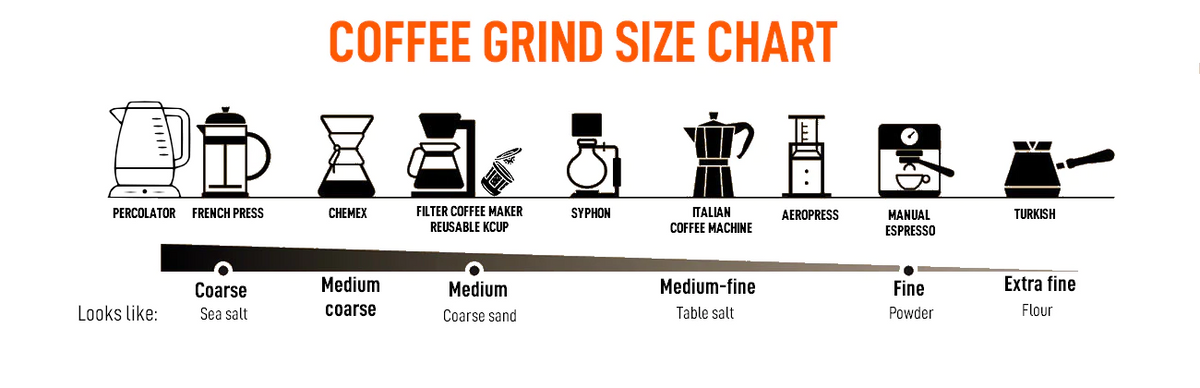
There are dozens of different grindings, it can be said that each machine or equipment requires a specific grinding.
With us you can choose to buy ground coffee for Moka or Filter.
We have tried to summarize them as follows:
- Jug/Cezve:
- Espresso:
- Moka:
- V60 Filter:
- Chemex:
- French Press/Infusore:
HOW LONG DOES IT LAST?
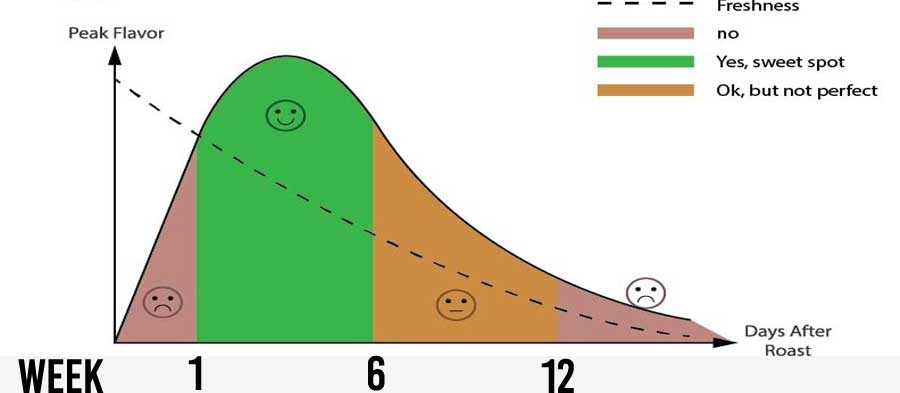
Coffee has a limited shelf life when it comes to quality. Although the label may state up to 24 months, generally high-quality coffee loses most of its flavor and aroma within a few months. We recommend drinking it between 10 and 60 days after the roasting date (provided the bag has never been opened). Once the bag is opened, the coffee quality deteriorates quickly and aromas and flavor are lost within a few days. Unfortunately, the roasting date is not always printed, especially by larger companies. On our packages, you will clearly find it written on the back.
P.S. all our bags are vacuum-packed with added nitrogen, which extends the potential shelf life of the product.
How to do:
ESPRESSO
Espresso requires some precision rules:
- Quality coffee
- Recommended roasting within 30-40 days
- Fine grinding
- Water temperature around 90-92°
- A single dose of 8-9g (double dose of 15-17g)
- Extraction time approximately 25 seconds
The use of quality espresso machines (range from €600 and up) can ensure a better result.
Preferably are machines that also have a coffee grinder to grind "fresh" coffee
MOKA
The Moka requires a little attention:
- Use filtered or bottled water (NO TAP)
- Recommended roasting within 30-40 days
- Medium-fine grinding
- Fill the boiler with water without exceeding the valve
- Place the ground coffee into the filter without pressing or making any bumps, simply level it at the edge
- Place over medium heat
- Wait for the liquid to rise through the chimney, without letting it gurgle (TURN OFF AS SOON AS THE FLOW OF COFFEE BEGINS TO GO FAST AND COLOURLESS)
- Mix before serving
The Moka should only be washed with water and any neutral detergents (taking care to rinse carefully with water), never in the dishwasher or with abrasive sponges.
FILTER V60/CHEMEX
Filter or Chemex coffee requires precision in times and weights, some advice:
- Quality coffee
- Recommended roasting within 20 days
- Medium grind (medium-coarse for Chemex)
- Filtered or bottled water
- Water temperature of approximately 90-94° depending on the coffee used (generally those washed at higher temperatures)
- Approximately 15g of ground coffee for every 250g of water (Chemex at least 30g per 500g of water)
- Pre-infuse for 30-40 seconds by pouring hot water for double the weight of coffee used
- Pour the water in two or three steps as desired with a rotating direction, being careful not to create too much turbulence
- Contact/percolation time approximately 3 minutes (4-5 for Chemex)
A light roast is generally recommended for filter systems
AEROPRESS
The Aeropress requires some precision rules:
- Quality coffee
- Recommended roasting within 20-30 days
- Medium grind (or as preferred)
- Use filtered water or bottle
- Water temperature around 85-90°
- A dose of approximately 17g per 200-220g of water
- Pour water for pre-infusion of 30-40 seconds
- Mix with the appropriate spoon
- Then pour in the remaining water and close the cap
- Turn the aeropress upside down and press firmly but steadily until extraction is complete
- Total contact/infusion time 2-3 minutes

OTHER SYSTEMS
There are dozens of different systems for extracting coffee, we have summarized the main ones here but if you need to know how to do the others not on the list, contact us
