


Specialty Coffee Costa Rica Hope Natural Thermal Aerobic
Tax included
Shipping calculated at checkout
In stock

Discover the intensity of a creamy and enveloping profile, where the vibrant notes of cherry and blood orange blend into a winey structure with magnetic complexity. Thanks to the innovative thermal process by the Ramirez-Navarro family, the medium-high acidity evolves into an extreme and persistent sweetness, delivering a perfectly balanced cup. Choosing this micro-lot of Esperanza variety means going beyond the boundaries of traditional coffee, savoring the future of specialty coffee.
FARMGATE PRICE
FARMGATE PRICE: €12.28/kg (paid directly to the farmer)
The Farmgate price is ultimately the actual price paid to the farmer who originally produced the coffee. Ultimately, it is the most transparent price you can find.
To the Farmgate price, the following costs must be added before reaching the roastery:
- Packaging costs
- Handling costs at origin
- Logistics costs (shipping and customs duties)
- Handling costs upon arrival
- Customs clearance and phytosanitary inspection costs in Europe
- Internal transport costs
SENSORY DESCRIPTION
TECHNICAL DESCRIPTION
| Origin | Costa Rica |
| Area | Los Santos |
| Cooperative/Farm | Don Alexis |
| Microlot | Los Campos - Esperanza |
| Altitude | 1750m |
| Variety | Esperanza |
| Process | Aerobic thermal natural |
FULL DESCRIPTION
Origin and Production Context
The coffee comes from the Los Santos region, Costa Rica, in an area adjacent to Tapantì National Park. Production is managed by the Ramirez-Navarro family, a group of over ten people coordinating the entire agricultural and processing activity.
The farm was founded by Alexis Ramirez, whose management established the agricultural protocols now followed by his wife, Dona Anabel, and their descendants. A key milestone in the technical evolution of the farm occurred in 2015 with the construction of "Los Campos", an internal micro-mill. This infrastructure allowed the family to leave the cooperative system, taking direct control over post-harvest processing and ensuring full traceability of every lot.
Botanical Aspects: Esperanza Variety
The lot in question consists of the Esperanza variety. It is an F1 hybrid obtained by crossing the Sarchimor T-5296 variety with the wild Ethiopia ET-25 variety.
-
Development: It is the result of joint research between Central American coffee institutes and World Coffee Research.
-
Agronomic characteristics: It has high productivity and strong resistance to diseases (such as rust), making it a strategic choice for long-term agricultural sustainability.
-
Cup performance: Despite its hybrid nature, it maintains high quality, with a complex profile and clean citrus notes.
-
Diversification: Besides Esperanza, the farm cultivates Caturra, Catuai, other hybrids (Milenio, Centroamericano), and a Gesha plot located at 2,000 meters altitude.
Processing Protocol (Thermal Process)
The coffee is processed with an innovative method that uses temperature control to influence the bean's chemistry:
-
Harvest: Selection of ripe cherries.
-
Greenhouse fermentation: Whole cherries are sealed in black plastic sheets and placed inside a solar dryer.
-
Thermal stress: Heat is maintained constant between 40-45°C. This temperature selects specific heat-resistant microbes.
-
Chemical reaction: Prolonged exposure to these temperatures breaks down the natural sugars in the pulp, leading to partial caramelization before the cherry is dried.
-
Drying: The process concludes with sun exposure for 30 days.
-
Storage: The coffee rests in parchment until the export phase.
Sensory Profile and Structure
The interaction between the Esperanza hybrid genetics and the thermal process produces a specific sensory profile:
-
Body: The cup is creamy, dense, and syrupy.
-
Acidity/Sweetness: Balanced, with a very present sugary component due to high-temperature fermentation.
-
Aromatic notes: Fruity and "funky," with a citrusy cleanliness in the finish.
Trade Model
Distribution takes place in collaboration with GroundsCoffee. This model involves removing all commercial intermediaries, keeping only one, allowing for a transparent revenue split and a direct connection between the Los Campos micro-mill and the final market. The coffee is classified as Single Estate Micro-lot, processed individually to preserve the unique characteristics of the cultivation site.
How to choose:
NITROGEN AND VACUUM
Our packages are all packaged in a protected atmosphere (first under vacuum and then we insert nitrogen), using this particular technology which eliminates oxygen in the package, the coffee remains fresh for up to 3 months after roasting.

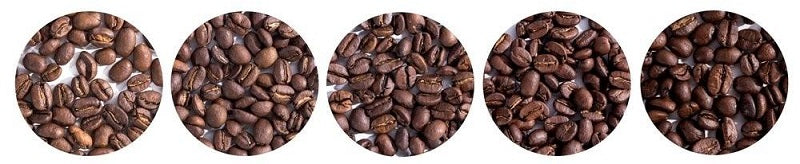
ROAST
We roast in two different ways, dividing into two main groups, based on the type of extraction:
- Light: suitable for Filtro/Aeropress type extractions, or for those looking for a coffee with a note of strong acidity and many aromas.
- Medium: suitable for Espresso/Moka extractions, or for those who want a coffee with a much more intense flavor and a hint of bitterness.
GRINDING
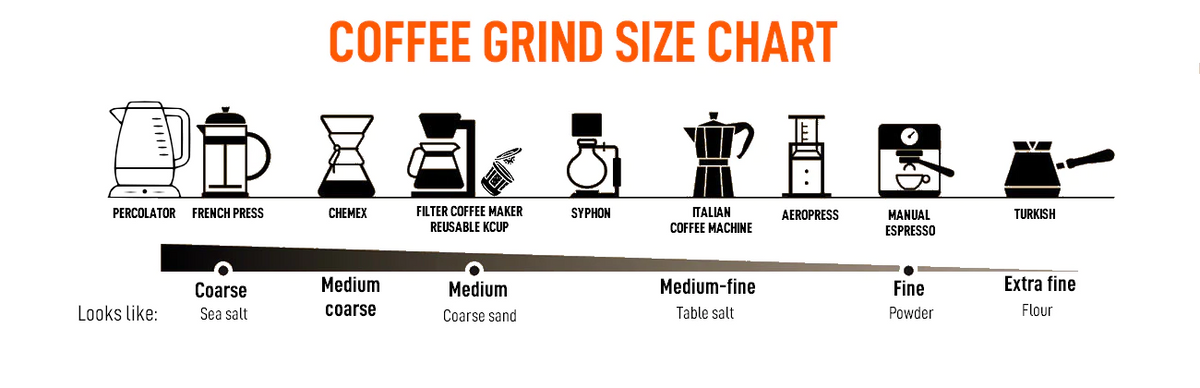
There are dozens of different grindings, it can be said that each machine or equipment requires a specific grinding.
With us you can choose to buy ground coffee for Moka or Filter.
We have tried to summarize them as follows:
- Jug/Cezve:
- Espresso:
- Moka:
- V60 Filter:
- Chemex:
- French Press/Infusore:
HOW LONG DOES IT LAST?
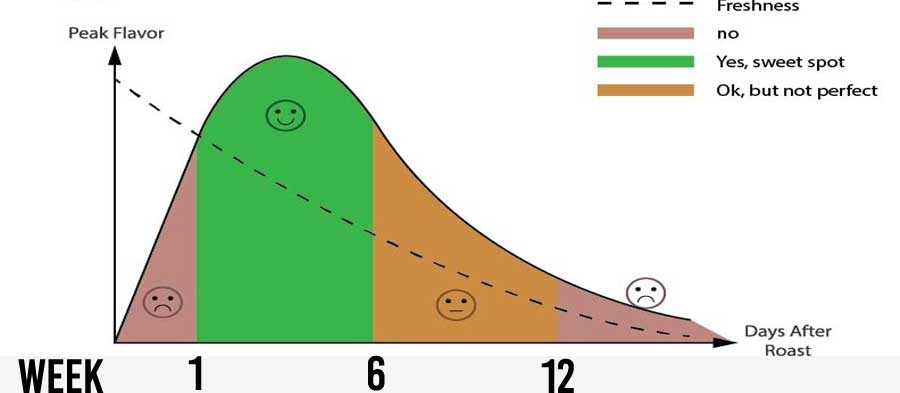
Coffee has a limited shelf life when it comes to quality. Although the label may state up to 24 months, generally high-quality coffee loses most of its flavor and aroma within a few months. We recommend drinking it between 10 and 60 days after the roasting date (provided the bag has never been opened). Once the bag is opened, the coffee quality deteriorates quickly and aromas and flavor are lost within a few days. Unfortunately, the roasting date is not always printed, especially by larger companies. On our packages, you will clearly find it written on the back.
P.S. all our bags are vacuum-packed with added nitrogen, which extends the potential shelf life of the product.
How to do:
ESPRESSO
Espresso requires some precision rules:
- Quality coffee
- Recommended roasting within 30-40 days
- Fine grinding
- Water temperature around 90-92°
- A single dose of 8-9g (double dose of 15-17g)
- Extraction time approximately 25 seconds
The use of quality espresso machines (range from €600 and up) can ensure a better result.
Preferably are machines that also have a coffee grinder to grind "fresh" coffee

MOKA
The Moka requires a little attention:
- Use filtered or bottled water (NO TAP)
- Recommended roasting within 30-40 days
- Medium-fine grinding
- Fill the boiler with water without exceeding the valve
- Place the ground coffee into the filter without pressing or making any bumps, simply level it at the edge
- Place over medium heat
- Wait for the liquid to rise through the chimney, without letting it gurgle (TURN OFF AS SOON AS THE FLOW OF COFFEE BEGINS TO GO FAST AND COLOURLESS)
- Mix before serving
The Moka should only be washed with water and any neutral detergents (taking care to rinse carefully with water), never in the dishwasher or with abrasive sponges.
FILTER V60/CHEMEX
Filter or Chemex coffee requires precision in times and weights, some advice:
- Quality coffee
- Recommended roasting within 20 days
- Medium grind (medium-coarse for Chemex)
- Filtered or bottled water
- Water temperature of approximately 90-94° depending on the coffee used (generally those washed at higher temperatures)
- Approximately 15g of ground coffee for every 250g of water (Chemex at least 30g per 500g of water)
- Pre-infuse for 30-40 seconds by pouring hot water for double the weight of coffee used
- Pour the water in two or three steps as desired with a rotating direction, being careful not to create too much turbulence
- Contact/percolation time approximately 3 minutes (4-5 for Chemex)
A light roast is generally recommended for filter systems
AEROPRESS
The Aeropress requires some precision rules:
- Quality coffee
- Recommended roasting within 20-30 days
- Medium grind (or as preferred)
- Use filtered water or bottle
- Water temperature around 85-90°
- A dose of approximately 17g per 200-220g of water
- Pour water for pre-infusion of 30-40 seconds
- Mix with the appropriate spoon
- Then pour in the remaining water and close the cap
- Turn the aeropress upside down and press firmly but steadily until extraction is complete
- Total contact/infusion time 2-3 minutes

OTHER SYSTEMS
There are dozens of different systems for extracting coffee, we have summarized the main ones here but if you need to know how to do the others not on the list, contact us

