


COFFEE HEROES SERIES - COLOMBIA - LAS FLORES - TABI NATURAL NITROGEN
Tax included
Shipping calculated at checkout
Low stock
Imagine an After Eight in liquid form, with the complexity of a competition coffee. This Colombian Tabi is an incredible explosion of peppermint and dark chocolate, achieved with an innovative nitrogen process. A luxurious and unforgettable experience.
What is COFFEE HEROES SERIES?
THE "COFFEE HEROES" SERIES HIGHLIGHTS THE STRONG COMMITMENT OF THE MOST VIRTUOUS AND VISIONARY COFFEE GROWERS IN PRODUCING THE BEST SPECIALTY COFFEE QUALITIES THAT CAN BE FOUND IN THE WORLD. THEY ARE TRUE GEMS, RARE AND PRECIOUS.
NOTE: WE ONLY HAVE ENOUGH OF THIS COFFEE FOR 50 PACKETS IN TOTAL.
FARMGATE PRICE
FARMGATE PRICE* 120USD
The Farmgate price is ultimately the real price paid to the farmer who produced the coffee (or cascara) at origin. It is the most transparent price you can find.
The Farmgate price must then be added to the following costs before reaching the roastery:
- Packaging costs
- Handling costs at origin
- Logistics costs (shipping and customs duties)
- Handling costs upon arrival
- Customs clearance and phytosanitary inspection costs in Europe
- Transport costs within Europe
DESCRIPTION SENSORY
DESCRIPTION TECHNICAL
| Package weight | 100g |
| Origin | Colombia |
| Area | Huila |
| Cooperative/Farm | LAS FLORES |
| Microlot | Jhoan Vergara |
| Altitude | 1750m |
| Variety | Tabi |
| Process | Natural combined Nitrogen |
DESCRIPTION COMPLETE
Variety: Tabi coffee was developed in Colombia by Cenicafé (the National Coffee Research Center) in 2002. It is a hybrid created by crossing three coffee varieties: Typica, Bourbon, and the Timor Hybrid. The goal was to combine the high quality of Typica and Bourbon with the disease resistance of the Timor Hybrid.
Harvest: The cherries are picked at the optimal ripeness from the healthiest plants with the best foliage. Harvesting takes place on rain-free days and in the early morning hours to ensure high sugar content and minimal water presence. The cherries are immersed in water and the "floaters" (cherries that float) are removed.
Process:
-
Aerobic Fermentation: The cherries are placed in open plastic barrels for 96 hours for open-air fermentation.
-
Thermal Shock: A thermal shock treatment is performed by immersing the cherries in hot water (50°C) for 5 minutes and then cooling them in water (20°C) for 25 minutes to stop the fermentation.
-
Pressure Anaerobic Fermentation: Subsequently, the cherries are placed in the BioMaster fermentation tank. Nitrogen is injected into the chamber and the pressure is set to 8 bar.
-
Liquid Recirculation: The "leachates" (fermentation liquids collected from the cherries during the initial open-air fermentation phase) are reintroduced into the tank and recirculated at 35 °C for 60 hours.
Drying: The coffee is dried in a hermetically sealed stainless steel dehumidifier until it reaches 20% moisture. This is followed by a resting period of 12 hours, after which drying continues for 16 hours until it reaches 11% moisture.
This system, called "Pristine Precision Drying", is used to maintain the uncontaminated quality of the coffee during the drying phase.
How to choose:
NITROGEN AND VACUUM
Our packages are all packed in a protective atmosphere (first vacuum-sealed and then we insert Nitrogen), using this particular technology that eliminates oxygen in the package, the coffee remains fresh up to 3 months after roasting.

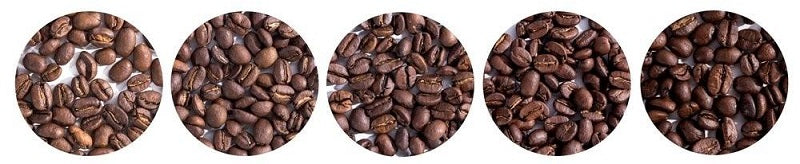
TOASTING
We roast in two different ways, dividing into two main groups based on the type of extraction:
- Light: suitable for Filter/Aeropress extractions, or for those looking for a coffee with a pronounced acidity note and many aromas.
- Medium: suitable for Espresso/Moka extractions, or for those who want a coffee with a much more intense flavor and a hint of bitterness.
GRINDING
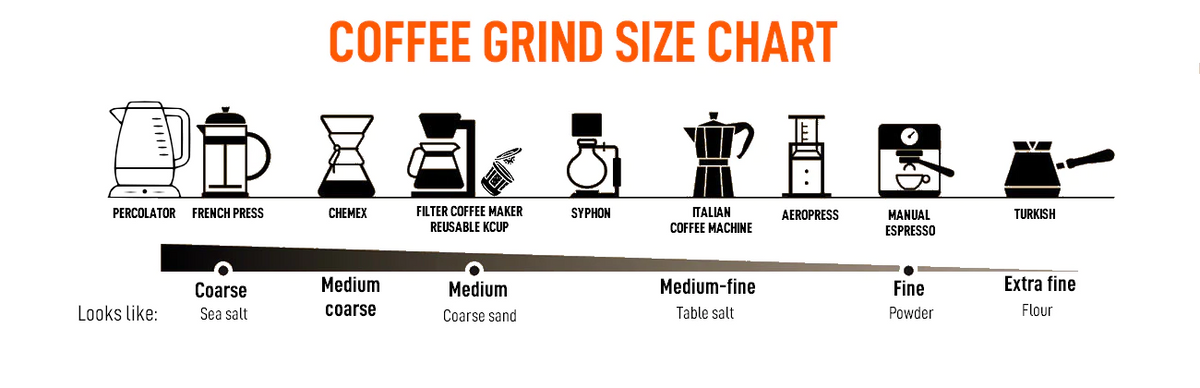
There are dozens of different grinds; it can be said that each machine or equipment requires a specific grind.
With us, you can choose to buy ground coffee for Moka or for Filter.
We have tried to summarize them as follows:
- Ibrik/Cezve:
- Espresso:
- Moka:
- Filter V60:
- Chemex:
- French Press/Infuser:
HOW LONG DOES IT LAST?
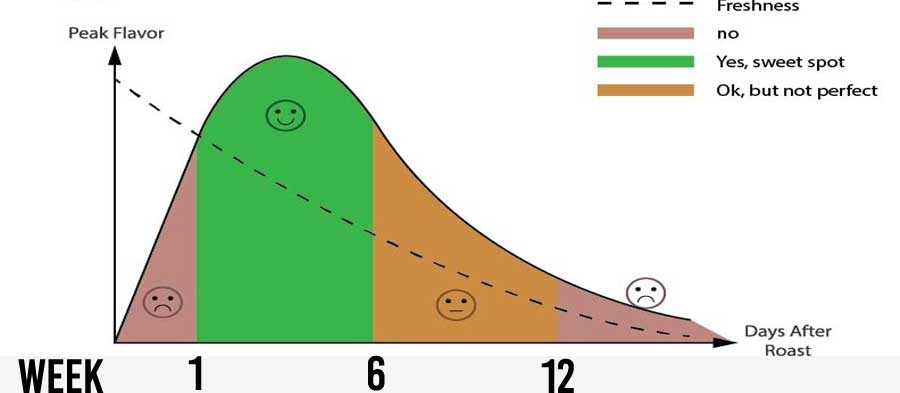
Coffee has a limited shelf life when it comes to quality. Although the label may state up to 24 months, generally high-quality coffee loses most of its flavor and aroma within a few months. We recommend drinking it between 10 and 60 days after the roasting date (provided the bag has never been opened). Once the bag is opened, the coffee’s quality deteriorates quickly, and within a few days, aromas and flavor are lost. Unfortunately, the roasting date is not always printed, especially by larger companies. On our packages, you will find it clearly printed on the back.
P.S. all our bags are vacuum-sealed and nitrogen-flushed, which extends the product’s potential shelf life.
How to do:
ESPRESSO
Espresso requires some precise rules:
- Quality coffee
- Recommended roasting within 30-40 days
- Fine grind
- Water temperature around 90-92°
- A single dose of 8-9 g (double dose of 15-17 g)
- Extraction time of about 25 seconds
Using quality espresso machines (starting from around €600) can ensure a better result.
Prefer machines that also have a grinder to grind the coffee "fresh"

MOKA
La Moka richiede un poca di attenzione:
- Usare acqua filtrata o di bottiglia (NO RUBINETTO)
- Tostatura consigliata entro i 30-40 giorni
- Macinatura Medio-fine
- Riempire la caldaia con l'acqua senza superare la valvola
- Mettere il caffè macinato nel filtro senza premere o fare ontagnette, semplicemente livellare al bordo
- Mettere su fuoco medio
- Aspettare che il liquido salga attraverso il comignolo, senza lasciare che gorgheggi (SPEGNERE APPENA IL FLUSSO DI CAFFE' COMINCIA AD ANDARE VELOCE E INCOLORE)
- Mescolare prima di servire
La Moka va lavata solo con acqua ed eventuali detergenti neutri (avendo cura di sciacquare accuratamente con acqua), mai in lavastoviglie o con spugne abrasive.
FILTRO V60/CHEMEX
Il caffè Filtro o Chemex richiede precisione nei tempi e nei pesi, alcuni consigli:
- Caffè di qualità
- Tostatura consigliata entro i 20 giorni
- Macinatura media (medio grossa per Chemex)
- Acqua filtrata o di bottiglia
- Temperatura dell'acqua di circa 90-94° in base al caffè usato (in genere i lavati a temperature più alte)
- 15g circa di caffè macinato ogni 250g di acqua (Chemex almeno 30g per 500g acqua)
- Fare pre infusine 30-40 secondi versando acqua calda per il doppio del peso di caffè usato
- Versare l'acqua in due o tre step a piacimento con un senso rotatorio facendo attenzione a non creare troppa turbolenza
- Tempo di contatto/percolazione di circa 3 minuti (4-5 per Chemex)
In genere è consigliata una tostatura chiara per i sistemi a filtro
AEROPRESS
L'Aeropress richiede alcune regole di precisione:
- Caffè di qualità
- Tostatura consigliata entro i 20-30 giorni
- Macinatura media (o come preferito)
- Uare acqua filtrata o bottiglia
- Temperatura dell'acqua di circa 85-90°
- Una dose di circa 17g per 200-220g di acqua
- Versare acqua per la pre infusione di 30-40 secondi
- Mescolare con l'apposito cucchiaio
- Versare poi la rimanente acqua e chiudere il tappo
- Capovolgere l'aeropress e premere con forza ma costante fino a completamento dell'estrazione
- Tempo di contatto/infusione totale di 2-3 minuti

ALTRI SISTEMI
Esistono decine di sistemi diversi per estrarre il caffè, qui abbiamo riassunto i principali ma se hai necessità di sapere come fare gli altri non nella lista, contattaci


