


Specialty Coffee Colombia Atunkaa - Decaffeinated
Tax included
Shipping calculated at checkout
In stock
Why is it different? Sweetness is the absolute protagonist. Thanks to the natural Sugarcane (E.A.) method, which uses a sugarcane derivative to gently extract caffeine, the bean's structure is preserved. The result in the cup is surprising: a full body with sweet notes of panela sugar, exotic hints of dried mango, and a pleasantly spicy finish.
Ethical and Traceable Choosing Atunkaa means supporting a project with real impact. Produced in collaboration with Coficauca and imported by Siruma, this coffee guarantees traceability and a fair price to small producers, the same ones who grow our best conventional lots.
Enjoy a sweet, clean, and vibrant espresso or filter coffee at any time of the day.
FARMGATE PRICE
FARMGATE PRICE: €8.23 (paid directly to the farmer)
The Farmgate price is ultimately the actual price paid to the farmer who produced the coffee at origin. It is the most transparent price you can find.
The Farmgate price must then be added to the following costs before reaching the roastery:
- Packaging costs
- Handling costs at origin
- Logistics costs (shipping and customs duties)
- Handling costs upon arrival
- Customs clearance and phytosanitary inspection costs in Europe
- Internal transport costs
SENSORY DESCRIPTION
TECHNICAL DESCRIPTION
| Origin | Colombia |
| Area | Cauca |
| Cooperative/Farm | Coficauca |
| Microlot | Atunkaa |
| Altitude | 1700-1900m |
| Variety | Colombia, Castillo |
| Process | Sugar cane Decaffeinated |
FULL DESCRIPTION
The History and Mission of Siruma
Siruma was founded as a company 5 years ago with the goal of working with disadvantaged and developing agricultural communities, focusing its efforts in the regions of Cauca, Caldas, and Tolima. Collaborating with many indigenous communities, Siruma chose a name derived from the Wayuunaiki language (indigenous people of northern Colombia) meaning "Paradise and Skies." Also, Atunkaa comes from the same language and means "sleep and peaceful dreams."
Traceability and Economic Model
Many generic Colombian "Sugarcane" decaffeinated coffees (purchased from importers already decaffeinated) have zero traceability regarding the farmer and the price, and no transparency on where most of the margin on a $4-5 coffee is made. Through third-party processing (tolling) of our decaf with Descafecol, Siruma and Falcon pay a sustainable price to the Association and the farmers: the decaffeinator gets a margin for processing, Siruma gets a margin, and Falcon gets a margin, while the Association and the farmer earn the largest percentages of the final price.
Atunkaa Sugarcane decaf comes from Cauca, Caldas, and Tolima, from the same partners who supply our community lots, small farmer blends, and micro-lots. Purchasing from the same supply chains as our non-decaf coffees helps channel greater volumes and revenues to these partners. The result is fully traceable decaf community lots (both for the farmers who contributed to the lots and for the farmgate price), which score 85-86 on the SCA scale, pay farmers better, and are easy to market.
The "Sugarcane" Process (Ethyl Acetate)
The decaffeination method used for Atunkaa is a natural process that leverages the abundance of sugarcane in Colombia. Here's how it happens:
- Creation of the Natural Solvent: The process begins with the fermentation of molasses derived from sugarcane to produce ethanol. This is mixed with acetic acid to create Ethyl Acetate (E.A.), a natural compound also found in ripe fruit (such as bananas and blackberries).
-
Preparation (Steaming): The green coffee is subjected to low-pressure steam. This step opens the pores of the beans and increases their moisture content, preparing them for caffeine extraction.
-
Extraction: The beans are immersed in a bath of E.A., which circulates through the coffee. Ethyl Acetate acts like a magnet: it selectively binds to caffeine molecules (specifically to chlorogenic acid salts) extracting them from the bean. This washing is repeated until almost all the caffeine has been removed.
-
Cleaning: Once extraction is complete, the coffee is steamed again at low pressure. Since Ethyl Acetate has a very low boiling point (around 77°C), the steam easily removes any residual traces of the solvent.
-
Drying and Polishing: Finally, the coffee is dried until it reaches the ideal moisture level for export (10-12%) and a natural wax (Carnauba) is applied or it is simply polished to protect the bean.
Why choose this method? Unlike other more aggressive chemical processes, the Sugarcane method avoids excessive heat or high pressure, preserving the cellular structure of the bean. This allows it to maintain a bright acidity and often adds a pleasant sweet and fruity note to the final cup.
How to choose:
NITROGEN AND VACUUM
Our packages are all packaged in a protected atmosphere (first under vacuum and then we insert nitrogen), using this particular technology which eliminates oxygen in the package, the coffee remains fresh for up to 3 months after roasting.
ROAST
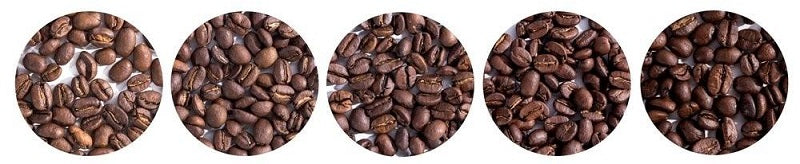
We roast in two different ways, dividing into two main groups, based on the type of extraction:
- Light: suitable for Filtro/Aeropress type extractions, or for those looking for a coffee with a note of strong acidity and many aromas.
- Medium: suitable for Espresso/Moka extractions, or for those who want a coffee with a much more intense flavor and a hint of bitterness.
GRINDING
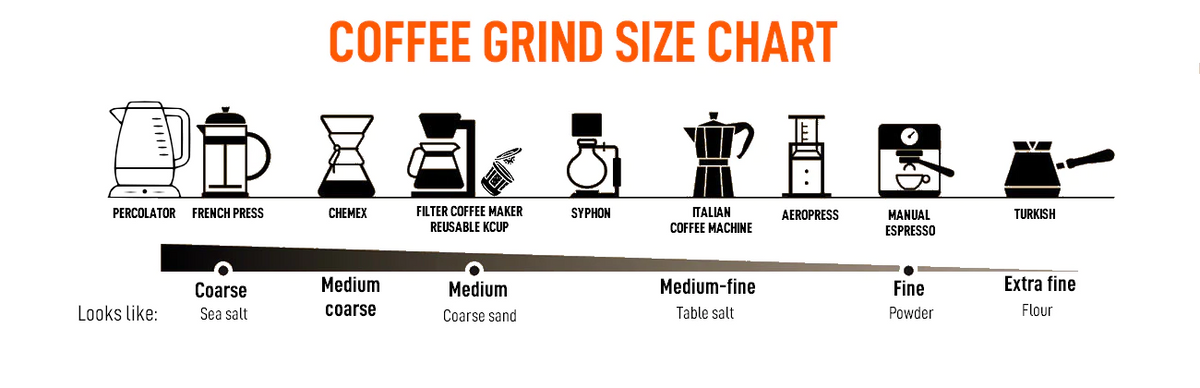
There are dozens of different grindings, it can be said that each machine or equipment requires a specific grinding.
With us you can choose to buy ground coffee for Moka or Filter.
We have tried to summarize them as follows:
- Jug/Cezve:
- Espresso:
- Moka:
- V60 Filter:
- Chemex:
- French Press/Infusore:
HOW LONG DOES IT LAST?
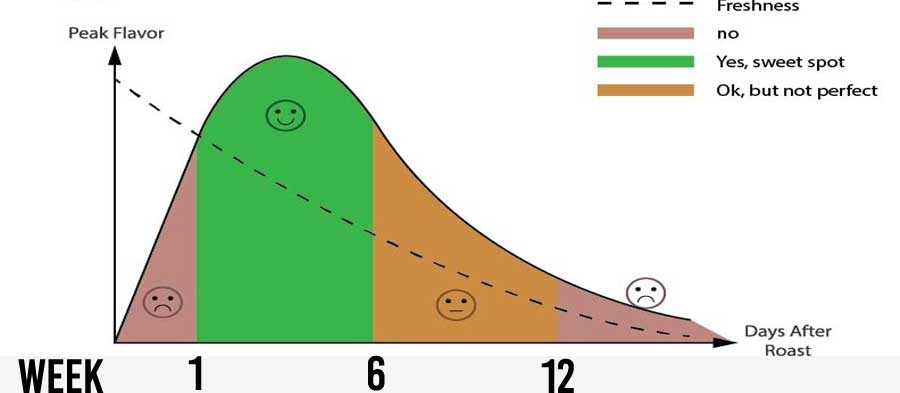
Coffee has a limited shelf life when it comes to quality. Although the label may state up to 24 months, generally high-quality coffee loses most of its flavor and aroma within a few months. We recommend drinking it between 10 and 60 days after the roasting date (provided the bag has never been opened). Once the bag is opened, the coffee quality deteriorates quickly and aromas and flavor are lost within a few days. Unfortunately, the roasting date is not always printed, especially by larger companies. On our packages, you will clearly find it written on the back.
P.S. all our bags are vacuum-packed with added nitrogen, which extends the potential shelf life of the product.
How to do:
ESPRESSO
Espresso requires some precision rules:
- Quality coffee
- Recommended roasting within 30-40 days
- Fine grinding
- Water temperature around 90-92°
- A single dose of 8-9g (double dose of 15-17g)
- Extraction time approximately 25 seconds
The use of quality espresso machines (range from €600 and up) can ensure a better result.
Preferably are machines that also have a coffee grinder to grind "fresh" coffee

MOKA
The Moka requires a little attention:
- Use filtered or bottled water (NO TAP)
- Recommended roasting within 30-40 days
- Medium-fine grinding
- Fill the boiler with water without exceeding the valve
- Place the ground coffee into the filter without pressing or making any bumps, simply level it at the edge
- Place over medium heat
- Wait for the liquid to rise through the chimney, without letting it gurgle (TURN OFF AS SOON AS THE FLOW OF COFFEE BEGINS TO GO FAST AND COLOURLESS)
- Mix before serving
The Moka should only be washed with water and any neutral detergents (taking care to rinse carefully with water), never in the dishwasher or with abrasive sponges.
FILTER V60/CHEMEX
Filter or Chemex coffee requires precision in times and weights, some advice:
- Quality coffee
- Recommended roasting within 20 days
- Medium grind (medium-coarse for Chemex)
- Filtered or bottled water
- Water temperature of approximately 90-94° depending on the coffee used (generally those washed at higher temperatures)
- Approximately 15g of ground coffee for every 250g of water (Chemex at least 30g per 500g of water)
- Pre-infuse for 30-40 seconds by pouring hot water for double the weight of coffee used
- Pour the water in two or three steps as desired with a rotating direction, being careful not to create too much turbulence
- Contact/percolation time approximately 3 minutes (4-5 for Chemex)
A light roast is generally recommended for filter systems
AEROPRESS
The Aeropress requires some precision rules:
- Quality coffee
- Recommended roasting within 20-30 days
- Medium grind (or as preferred)
- Use filtered water or bottle
- Water temperature around 85-90°
- A dose of approximately 17g per 200-220g of water
- Pour water for pre-infusion of 30-40 seconds
- Mix with the appropriate spoon
- Then pour in the remaining water and close the cap
- Turn the aeropress upside down and press firmly but steadily until extraction is complete
- Total contact/infusion time 2-3 minutes

OTHER SYSTEMS
There are dozens of different systems for extracting coffee, we have summarized the main ones here but if you need to know how to do the others not on the list, contact us


